

A Pipe Burst in My House—What Should I Do Now?

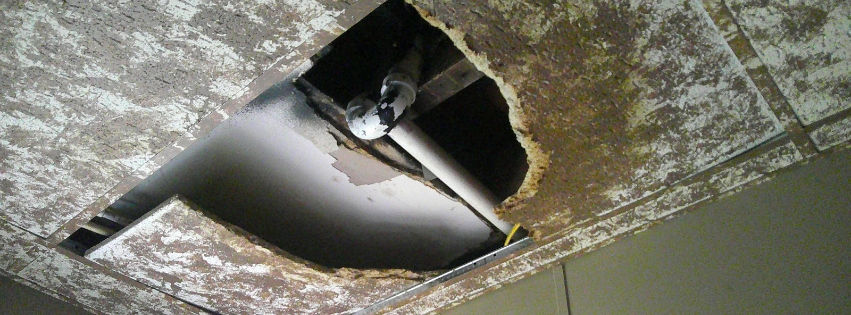
You hear running water where there shouldn’t be any. You notice water coming through the ceiling. Or you walk into a room and discover the floor is already soaked.
A burst pipe can create a lot of damage in a short amount of time—and when it happens, it can be hard to know what to do first.
The good news is that you don’t have to figure out the entire restoration process right away.
If a pipe bursts in your house, focus first on stopping the water, staying safe, documenting the damage, and getting help with the cleanup and drying process.
Here’s where to start.
1. Shut Off the Water
If you can safely access your home’s main water shutoff valve, turn off the water as soon as possible.
Stopping the flow of water can make a significant difference in how much of your home is affected.
If you don’t know where your main shutoff is—or you can’t safely reach it—call a plumber or other appropriate professional for help.
Once the water is shut off, you can begin dealing with what has already entered your home.
2. Watch for Electrical Hazards
Water and electricity are a dangerous combination.
If water is near electrical outlets, appliances, light fixtures, your electrical panel, or other electrical components, don't enter the affected area unless you know it is safe.
This is especially important if a water pipe bursts inside a ceiling or wall and water begins traveling into other parts of the home.
Your first priority is always safety. Cleanup can wait until you know the area is safe to enter.
3. Call a Plumber for the Burst Pipe
A burst pipe repair typically requires a plumber to address the source of the problem.
But repairing the pipe and repairing the water damage are two different things.
A plumber can stop the leak and repair the plumbing. A water damage restoration company addresses the water that escaped and the damage it caused.
Depending on the situation, you may need both.
4. Document the Water Damage
Before cleanup gets underway, take photos and videos of the affected areas when it is safe to do so.
Document visible standing water and any affected walls, ceilings, flooring, furniture, cabinets, or belongings.
If the damage extends into multiple rooms, photograph each one.
This gives you a record of what happened and may be useful if you decide to file an insurance claim.
5. Call a Water Damage Restoration Company
Once the source of the water is under control, the next priority is dealing with the water that escaped.
And unfortunately, water doesn't always stay where you can see it.
It can soak into drywall, insulation, flooring, subflooring, cabinets, trim, and other building materials. It may also travel through walls or from one floor of your home to another.
Professional water damage cleanup is about more than removing visible water. The affected areas need to be evaluated so you know where moisture traveled and what needs to happen next.
6. Get the Water Out—and the Structure Dry
Removing standing water is an important first step, but it isn't the end of the process.
After extraction, affected areas may need professional drying equipment such as air movers and dehumidifiers. Moisture levels can also be monitored during the drying process to help determine when affected materials have dried appropriately.
Depending on the severity of the damage, some materials may be able to dry in place while others may need to be removed.
Every water loss is different, which is why the drying plan should be based on what actually happened in your home.
7. Don't Forget About Hidden Water Damage
One of the biggest concerns after a burst pipe is the water you can't see.
Imagine a pipe bursts behind a wall.
You might notice a wet spot on the drywall or water pooling on the floor. But moisture could also have reached insulation, framing, the back of the drywall, flooring, or nearby rooms.
Or perhaps a pipe bursts upstairs and water begins coming through the ceiling below.
Drying the visible surface doesn't necessarily address all of that moisture.
That’s one reason getting the damage evaluated quickly matters.
Will I Need to Replace Everything That Got Wet?
Not necessarily.
Whether a material can be saved depends on several factors, including the type of material, how much water it absorbed, how long it remained wet, and the overall conditions of the water loss.
Some materials may be dried and saved. Others may need to be removed and replaced.
The goal shouldn't be to tear out everything automatically. It should be to determine what can reasonably be saved, remove what can't, and properly dry the affected structure.
What Happens After Everything Is Dry?
Once the water has been removed and the structure is dry, there may still be repairs to complete.
Depending on the extent of the damage, that could mean replacing drywall or insulation, repairing ceilings, installing flooring, replacing trim, painting, or completing other reconstruction work.
That’s the difference between simply cleaning up water and fully restoring your home.
Quality Restoration & Renovation can help with both the water mitigation and the repairs that may be needed afterward, giving you a clearer path from the initial damage to a restored home.
Can I Prevent Pipes From Bursting?
Not every plumbing emergency is preventable, but some simple precautions can reduce the risk—especially during Northern Indiana winters.
Know where your main water shutoff valve is before you need it. During freezing weather, take steps to protect vulnerable plumbing and keep your home adequately heated. If you notice signs of a plumbing problem, such as an unexplained drop in water pressure or an active leak, don't ignore it.
And if you suspect a pipe has frozen, address the situation before it becomes a burst pipe and a much larger water problem.
A Pipe Burst. Now Let’s Get Your Home Dry.
A burst pipe can turn an ordinary day into an emergency pretty quickly.
You don't need to know every step of water damage restoration before you call for help. You just need someone who can assess the damage, explain what needs to happen, and help you move forward.
Quality Restoration & Renovation can help with water extraction, drying, water damage cleanup, and the repairs needed to put your home back together.
If a burst pipe has caused water damage in your home, contact Quality Restoration & Renovation to get started.


Comments